What, Why & Where – The 5 Thermal Spray Processes
Thermal spray is a popular surface treatment choice in a wide range of industries. From abradable coatings and thermal barriers in aerospace, to corrosion resistance in marine environments and wear resistance in manufacturing. Whatever the industry, thermal spray coatings provide reliable and high-performance solutions for critical components.
But, with such a range of processes and materials available which one should you choose? The Poeton What, Why, Where Guide will help you interpret the different options available, including the benefits, common applications and key properties of the five main thermal spray processes.
Read on to find out more.
COMBUSTION WIRE
WHAT?
-
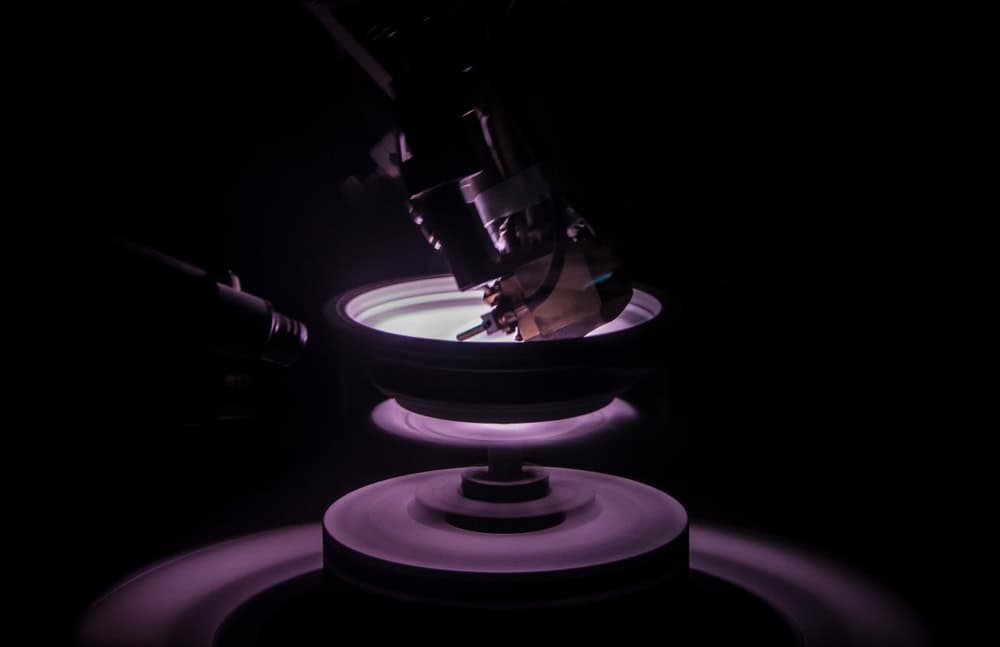
- Combustion wire spray uses a metal or alloy wire that is fed through an oxy/acetylene flame. This melts the material before compressed air blasts the material onto the substrate of the part.
- Some of the most common materials used in combustion wire spraying are zinc, aluminium, molybdenum, and high chromium steel.
WHY?
-
- A cost-effective method because the low gas consumption is combined with a high deposit rate.
- Offers precise control of the coating parameters.
WHERE?
-
- Anti-corrosion coatings using zinc & aluminium.
- Bond coats using molybdenum provide good adhesion to both the substrate and any topcoats.
- Hard & wear-resistant coatings using high chromium steel.
- Anti-corrosion & wear resistance using stainless steel and nickel.
TYPICAL PROCESS PARAMETERS & PROPERTIES?
-
- Flame Temperature: 3100°C
- Particle Velocity: 180m/s
- Porosity Content: 5%
- Oxide Level: 15%
- Bond Strength: 20N/mm2
COMBUSTION POWDER
WHAT?
-
- Similar to wire spraying, combustion powder thermal spray uses a powdered material that is fed through an oxy/acetylene flame and blasted onto the substrate with compressed air.
- There is a much wider choice of materials available when compared to combustion wire spraying as many alloys cannot be produced in wire form.
WHY?
-
- Like combustion wire, it is also a cost-effective method due to the low gas consumption and high deposit rate.
- A wide choice of powdered materials available, only limited by those with a higher melting point than the flame temperature.
- The relatively low temperature of the process means the substrate avoids any damage, distortion or material changes.
WHERE?
-
- Wear resistance on pumps and impellers.
- Excellent impact resistance.
- Corrosion protection in a range of environments.
TYPICAL PROCESS PARAMETERS & PROPERTIES?
-
- Flame Temperature: 3100°C
- Particle Velocity: 50m/s
- Porosity Content: 5%
- Oxide Level: 15%
- Bond Strength: 17N/mm2
ELECTRIC ARC
WHAT?
-
- The metal material, in the form of two separate wires, is brought together at the gun nozzle. One is positively charged and the other is negatively charged resulting in a high voltage electric arc being struck between them. This melts the metal before it is atomised and projected at the substrate by compressed air.
- Some of the most common materials used in electric arc spraying are aluminium, zinc, nickel alloys and iron alloys.
WHY?
-
- Can be portable as it only requires compressed air and no other gases.
- High spray rates – double the capacity compared to combustion wire thermal spray.
- Higher bond strength & adhesion.
- Good reliability.
- Applied at lower temperatures than plasma or HVOF and therefore it is a good option for heat-sensitive substrates.
- Two different wires can be sprayed simultaneously to further combine materials.
WHERE?
-
- Typically used to apply materials including aluminium, carbon steel and metal alloys.
- Salvage and repair of parts including shafts.
- Good choice for wear resistance, corrosion protection, restoration and bond coats.
TYPICAL PROCESS PARAMETERS & PROPERTIES?
-
- Flame Temperature: 4000°C
- Particle Velocity: 180m/s
- Porosity Content: 3%
- Oxide Level: 15%
- Bond Strength: 28N/mm2
PLASMA SPRAYING
WHAT?
-
- A compressed gas (often argon, hydrogen or nitrogen) is ionised into a plasma by a high voltage. The powder feed is heated to a very high temperature and blasted at the part by the compressed gas.
- Plasma spraying is the most versatile of the thermal spray options as a wider range of materials including metals and ceramics can be used.
- Most common materials used ceramics, cermets, iron & nickel alloys and abradables.
WHY?
-
- Highly versatile.
- Can spray materials with a very high melting point including tungsten and ceramics like zirconia.
- Produces a high-quality thermal spray coating that is denser & stronger than combustion & electric arc coatings.
- A wider range of particle sizes can be sprayed (5-100µm) when compared to HVOF.
WHERE?
-
- Very wide range of uses and commonly used across industries including aerospace, medical, automotive, & marine.
- Plasma spray often uses materials including aluminium oxide, chrome oxide & zirconium oxide.
- Corrosion protection, wear resistance and thermal barriers.
TYPICAL PROCESS PARAMETERS & PROPERTIES?
-
- Flame Temperature: 15,000°C
- Particle Velocity: 300m/s
- Porosity Content: 0.5-3%
- Oxide Level: 0.5-5%
- Bond Strength: 35-70N/mm2
HIGH-VELOCITY OXY-FUEL (HVOF)
WHAT?
-
- HVOF uses a fuel that consists of kerosene, acetylene, propylene and hydrogen, which is ignited with oxygen and projected by compressed air and further compressed through a long barrel. The powdered material is fed into the stream and blasted at a very high velocity into the substrate.
- Typical materials used with HVOF include nickel & cobalt alloys, carbides & cermets and MCrAlY.
WHY?
-
- Very good hardness and substrate bonding.
- Higher density and lower oxide content within the coating due to the velocity of the process.
- However, it is a more complex system and comes at a higher cost.
WHERE?
-
- Pumps
- Valves
- Pistons
- Actuators
TYPICAL PROCESS PARAMETERS & PROPERTIES?
-
- Flame Temperature: 2600°C
- Particle Velocity: 750m/s
- Porosity Content: 0.2-2%
- Oxide Level: 0.5-5%
- Bond Strength: 70+N/mm2
Now you’re familiar with the five main types of thermal spray processes available, the properties they give and the applications they’re likely to be used for, let Poeton help you take the next step.
Our thermal spray engineers will assist you in selecting from our wide range of thermal spray treatments suitable for tackling the most difficult of engineering challenges. For more information on the range of thermal spray processes from Poeton see:
Apticote 800
A family of high-performance ceramic, cermet and metallic plasma coatings that can be applied to a wide variety of substrates.
Apticote 810
The next generation of non-stick coatings; tougher, harder and with better release properties than conventional polymer coatings.